veromundo.store

Richmond mourns the death of Asama Ayyad
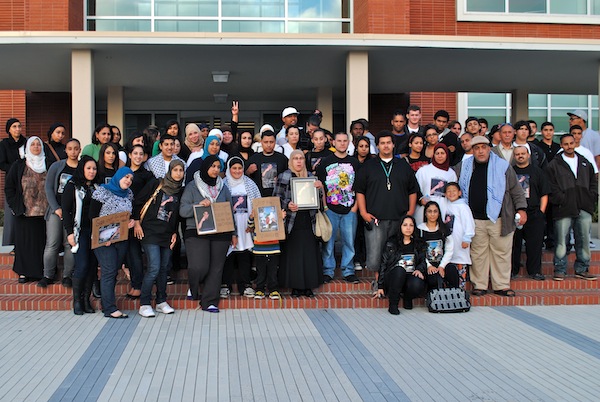
After he was shot while driving his car on the evening of June 25, 20-year-old Asama Ayyad drove back to the mosque in Richmond where he had been praying and volunteering just before the assault. Almost unconscious, he crashed into two electric poles at Cutting Boulevard. “There is no God but God and Mohamed is his prophet. To God we belong and to Him is our return,” he prayed in Arabic. Those were his last words. Ayyad had been shot in the upper right side of his torso, and by the time the police arrived he was unconscious. He was taken to the hospital and pronounced dead there. A 15-year-old friend who had been riding in the passenger seat survived being shot in the leg. The fatal bullet had come from a white van carrying four teenagers and a 20-year-old man; the van had followed Ayyad’s vehicle after he and his friend left a ceremony at the mosque that night. Nineteen-year-old Nickie Donald of Richmond has been charged with Ayyad’s murder; according to law enforcement he had mistaken Ayyad’s car for someone else’s and opened fire. Although the number of homicides in Richmond has dropped — according to the Richmond Police Department there have been 12 this year, nearly 50 percent fewer than at this time last year — violence remains an enduring problem for the city. In the two weeks since Ayyad’s murder, there have been two other shooting deaths involving young men in Richmond, those of 20-year-old Alan Torres and 18-year-old Emani Stephens. Ayyad’s friends and family remember him as a peaceful spirit who was respectful to his elders, helpful with the young, and who tried to avoid violence. “He had such a pure heart. He was like an angel,” said his mother Faisa Ayyad with tears in her eyes as she spoke about her son at an interview at the family’s home a few days ago. Last Tuesday, about 60 of Ayyad’s friends and family members showed up at the Richmond City Council meeting to express their sadness over the young man’s death and their disgust with violence. Most of them were wearing T-shirts bearing his picture. “His death has left a hole in the heart of many people in Richmond and El Cerrito,” his mother said sorrowfully. Ayadd’s family moved to the United States from Palestine more than three decades ago because they wanted to live in a safer place. Naim Ayyad, his father, emigrated 35 years ago; his mother joined her husband five years later. A hard-working couple, they opened a halal market selling Middle Eastern food and meat in Berkeley and raised their five children, three boys and two girls. Asama Ayyad was their fourth child. Although the family currently lives in El Cerrito, he attended Kennedy High School in Richmond and regularly attended Masjid Al-rahman, a mosque in Richmond. After some recent hardships, including Naim Ayyad having a heart attack a few years ago, the family sold the market and Asama Ayyad dropped out of school to help the family. Currently their family business is a Middle Eastern restaurant in Albany called Zaki Kabob House opened by the eldest son, 27-year-old Ramsy Ayyad. But despite the family’s hardships, Ayyad’s relatives say that the young man was looking forward to the future. In November he was planning to visit Jerusalem, where his parents are from originally. He wanted to get married and dreamed of having his own business one day. He also hoped to work for the California Highway Patrol. In order to make that possible, he wanted to get his high school diploma and was planning on taking classes soon to get his GED. On the evening of his death, Ayyad had left his part-time job at Whelan’s Cigar Store in Berkeley and gone to Masjid Noor, a Richmond mosque at 13th Street and Cutting Boulevard that was hosting a reunion for about 1,000 Muslims from California and other states. They were getting together for an annual Ijtimah, a gathering to pray, help each other, and remember Islamic values. Ayyad enjoyed helping and especially wanted to give a hand to his uncle, who was the cook for this large crowd. After dinner, some people stayed to sleep at the mosque, and others went home. After helping his uncle, Ayyad decided to leave, too. He was afraid for his beloved car, which was parked outside. The white 1999 Lexus that his father had given him as a present had become Ayyad’s project. The car was bought for cheap but Ayyad had spent time and all his savings fixing it and adding new features, like 24-inch rims, new paint and speakers. “The car was like his little baby,” said his cousin Noor Ayyad. Family members say that Asama Ayyad was aware of violence and gangs in Richmond, but wanted nothing to do with them. Just a week before, his 22-year-old best friend Samir Ayesh had been shot and killed in Hayward when he asked graffiti painters not to tag the walls of his house. So far the police have not caught the perpetrators, and his family members say that Ayyad had been very depressed about it. When his uncle asked him to stay longer at the mosque, Ayyad said, “I don’t feel comfortable being in this area and I don’t feel safe at all.” Ayyad left with his friend, a teenage neighbor who wanted a ride in the shiny white Lexus. The plan was to go for a ride and then go home, said his family. But at the traffic light on 22nd Street and Bissell Avenue, gunfire erupted from a white van that was following them, hitting the Lexus several times. Mortally wounded, Ayyad’s first instinct was to go back to the mosque, a safe haven of spirituality, family and community. The police have stated that the shooting was a case of mistaken identity, but Ayyad’s family thinks that the youngsters in the van were trying to steal the car. “I wish they had asked for the car,” said Kammal Ayyad, one

Richmond mourns the death of Asama Ayyad Read More »
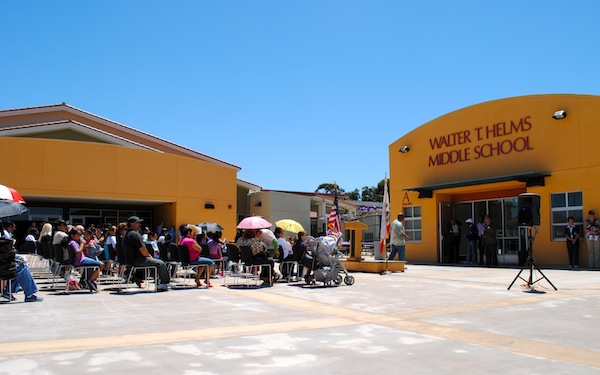
New Helms Middle School ready to show

While a band of mariachis played in front of the new Walter T. Helms Middle School, some teachers, city officials, parents and children were lining up to get meat and frijolesat a buffet. Others were touring the brand new campus under a cloudless blue sky. This Saturday, the Contra Costa Unified School District invited the community to an open house showcasing the new campus of Helms, the only middle school in San Pablo. The 140,000 square foot facility had been under construction for almost three years next to the old facility and it will be ready for the kids in the fall. “We invited the community to see what all the traffic, dust and noise were about,” said Bill Fay, Chief Operations Officer, who was responsible of the construction. Fay said that the old campus was built fifty to sixty years ago — the electrical system was old, the roof needed repair and there was no infrastructure for computers. Now at the Helms Middle School all classrooms and offices are fully wired for Internet access. There are three computer labs and a computer lab area in the library. The school includes “Green Schools” elements such as lighting efficient controls and a storm water treatment system. For the first time the community was invited to tour around the facilities. “It’s very important for me to know the place where my kids are coming to school,” said Richmond resident Xiomara Diaz, the mother of 11-year old twins William and Walter. Security is an issue that concerns many parents. “I like the fact that there are going to be security cameras because they are going to be checking out what the kids are doing,” said Paula Soltero, whose child will attend the school this fall. The school will also have a full surveillance camera system that the San Pablo Police Department will be able to access via a web-based coordination system. Brian Tibbot, the school’s life science teacher who was attending the event, said that his students were eager to leave the old campus and would regularly ask him during the school year, “When are we moving?” “In this new school there are way more things to do, like a big gym, basketball court, auditorium and even a dance room,” said 12-year-old Yomani Mapp. The school includes a multi-purpose room that has a stage for events and performances, and a full-service kitchen, with interior speed line system for service and multiple snack bar locations. “It’s clean and it looks new, ” said 11-year-old Jonathan Dueñas after looking at the facilities. “Hopefully there won’t be graffiti everywhere,” said Tamisha Walker, Yomani Mapp’s mother. Jorge Flores, father of a 13-year-old student, said he hopes everyone will make a collective effort to take care of the school and keep it new. “We hope that the kids, feeling more secure and motivated, will try harder,” said Flores. The Measure J Bond, approved by voters in 2005, provided the $70 million needed to rebuild the school, including  $54 million for the main campus and $16 million for demolition of the old campus and new field construction. The old school building is currently standing, but the last step for completing the new campus will to demolish it and build an integrated recreation area that can be used by the community.  Like many Richmond middle schoolers, Katie Hueso went to Helms. Now a Richmond High senior, she visited the new campus on Saturday with her family. Her little sister Nancy will come to Helms in August. Katie said that she liked the new facilities a lot. “In the old school you couldn’t even go to the bathrooms—they didn’t even have doors and there was no privacy. Here everything is new,” she said. June 2, 2010 Richmond Confidential

New Helms Middle School ready to show Read More »

Brazilian community bustling in Richmond

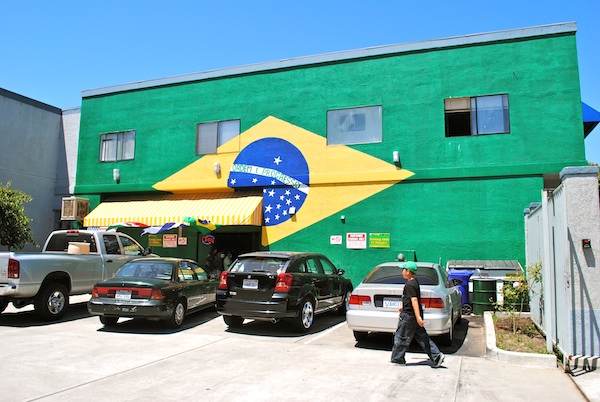
A big Brazilian flag can be seen from the intersection of San Pablo and MacDonald avenues in Richmond. Smart BR Coffee, a Brazilian restaurant-coffee house at 4820 Bissell Avenue, has the flag painted covering the front of its building. During World Cup matches, the restaurant’s parking lot fills up and cheers can be heard from the street in the middle of the day. In addition to a Brazilian flag outside, the café flies fabric flags of the U.S., Mexico, Honduras and South Africa both inside and outside the building. “Welcome,” reads one big sign hanging on the interior. There’s a wall covered with flyers, postcards and cards advertising the many Brazilian events and businesses all over the Bay Area. “I come here to eat typical Brazilian food, find friends and community and watch the game,” said Cesar Menezes, a Richmond resident and Brazilian immigrant whose work maintaining soccer fields is flexible enough that he can come and watch the World Cup at Smart BR Coffee. Menezes was one of about 60 people who showed up at the restaurant to watch Brazil’s national soccer team play Chile at 11:30 a.m. on Monday. Most of the spectators were Brazilian and were wearing the team’s T-shirt, caps or some item that represented their country. Opened just eight months ago, Smart BR Coffee is a spot where Brazilians who live in or near Richmond come to have a little taste of home. Richmond has only three Brazilian restaurants, but different Brazilian communities organize events to make sure they gather together with their compatriots. The Brazilian Consulate in San Francisco estimates that there are 40,000 Brazilians living in the Bay Area. “We don’t really know because we don’t have them registered,” said Rosana Sa, Assistant for Cultural Affairs from of the Brazilian Consulate. The high rents in the Bay Area have led many Brazilian immigrants to choose to live in Richmond because housing is more affordable. Menezes said that’s the case for his friends and himself. “I found a cheap place in Richmond and it’s a nice place,” he said. Two printed Brazilian newspapers — Brasil Best and Brazil Today — circulate in the Bay Area. Three of Richmond’s Christian churches — the Bay Area Brazilian Church, The First Presbyterian Church and the Church of the Living God — offer Portuguese-speaking ministries. William Silva, or “Pastor William,” as his parishioners from the Bay Area Brazilian Church know him, said that Brazilian immigrants usually work in construction, as baby sitters, drivers, delivering newspapers and in the hauling business. “They work hard,” he said. Olavo Dourado, owner of Smart BR Coffee, said that he was one of the first Brazilians to move to Richmond 23 years ago, and that during the past 20 years the population grew. However, “about 30 percent had left in the past two or three years,” Dourado estimated, saying that the recent economy here had pushed some immigrants to go back to their home country. Eddy Delima immigrated from Brazil 24 years ago. He’s seen the growth and decline of the Brazilian population, too. Delima is member of Saint John the Baptist, a Catholic church in El Cerrito. On Sundays his church offers mass in Portuguese. According to Delima, about 140 Brazilians are members of this church, and half of them are Richmond residents, including himself. Delima was one of the organizers of Festa Junina, a traditional Brazilian June Festival related to St. John the Baptist’s holy day. The festival took place June 5 at Richmond’s Veteran’s Hall, where more than 500 people showed up to enjoy the Brazilian food, live music, costumes, and a play. Delima said that events like these are important because, “We want to celebrate our culture and keep it alive.” Acording to Delima, Brazilian immigrants work too hard and don’t have much of a social life, so his hope is that, “if they are feeling homesick, they can come to the event and have fun for one day,” he said. “We get together to celebrate because we are lonely,” said Thais Silva, owner of Pikanha’s steak house, a Brazilian family-owned restaurant in Point Richmond. She said that Brazilians like to hear happy music and to feel at home with one another because, “We miss our country.” Pastor William says that most Brazilian immigrants in Richmond are young people in their twenties who left their families behind. “They work so hard that they don’t have a life anymore,” said the pastor. Like Delima’s church, Pastor William’s Bay Area Brazilian Church also organizes events, like a Brazilian celebration this past Saturday that included capoeira, food and music. “People started to came at eight in the morning until eight at night,” he said. His church has a TV screen where parishioners can watch the World Cup games — they had one last Sunday, when Brazil was played the Ivory Coast, which was followed by a barbeque. Maria Rodman, who was born in Brazil and is now a U.S. citizen, has lived in the country for 38 years. She came from Berkeley to the Smart BR Coffee to watch the match against Chile together with other Brazilians, “We are patriots, we like soccer games and we like to cheer up together,” she said. Brazil beat Chile 3-0. July 1, 2010 Richmond Confidential

Brazilian community bustling in Richmond Read More »

Opponents raise doubts over Point Molate casino mailer

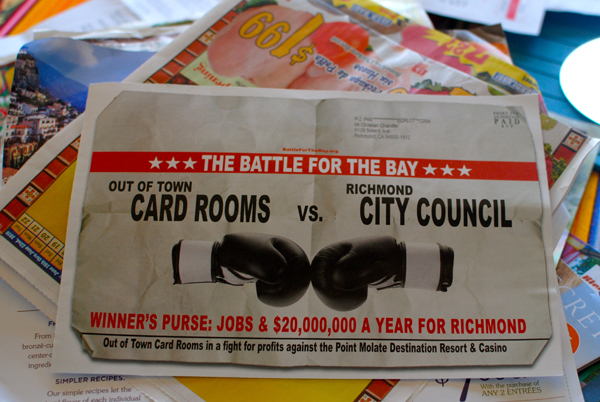
Over the past few weeks, a full color brochure titled “The battle for the bay” turned up in the mailboxes of Richmond residents. The brochure shows two boxing gloves facing each other. “Out of town card rooms vs. Richmond city council” reads the text on the front page, implying that the Richmond city council is in favor of the proposal to build a casino at Point Molate and is fighting with out of town card rooms who oppose its construction. “Winners purse: Jobs & $20,000,000 a year for Richmond,” reads the text at the bottom of the front page. Inside, the brochure states that the casino project would create 12,000 jobs. But the brochure was not an initiative of the Richmond city council —  in reality Mayor Gayle McLaughlin, Vice Mayor Jeff Ritterman and councilmember Tom Butt have all expressed concerns about the building of the casino. The brochure was paid for by Upstream LLC, the developer that intends to build a casino resort at Point Molate. The mailing return address at the back of the brochure is Upstream’s. (Click here for the website version of the brochure.) This ad might have gone to the household recycle bin in many cases, but didn’t go unnoticed by residents who are concerned about the building of a casino. “The entire messaging that the developer has been using is ‘We will bring jobs.’ The problem that a lot of people have with the message is that the numbers are hyper-inflated,” said Joan Garrett, a member of Citizens for a Sustainable Point Molate, a grassroots organization that opposes the construction of a casino. Upstream officials readily admit that they are behind the ad and say that it was necessary to combat inaccurate information circulated by their opponents via other brochures. “Over the last six months there was a huge amount of misinformation put out about the project,” said Jim Levine, managing partner of Upstream, referring to other fliers and a TV ad opposing the building of the casino. Levine specifically mentioned a brochure titled “What happens in Richmond stays in Richmond” mailed by a group called Stop the Mega Casino. This flier, which shows a parody of the famous “Welcome to Las Vegas” sign, claims that building a casino in Richmond is not going to bring positive changes or jobs. “If we allow the Pt. Molate Mega Casino, here’s what stays in Richmond: The drug dealing will stay … The crime will stay,” reads the brochure. “The Point Molate Mega casino is money Richmond will never see and jobs Richmond will never get,” it concludes. “It was clear after we did some investigating that most of it was being put out by a consortium of card clubs,” said Levine. He claimed that the California Grand Casino, a card club in Pacheco, was one of them but didn’t want to mention others. (The California Grand Casino didn’t respond to Richmond Confidential for comment.) A Contra Costa Times article published in May claims that fourteen card clubs are behind the Stop the Mega Casino campaign and were the ones responsible for the brochures and the ads. Levine says that card clubs “historically had no interest in doing anything for Richmond — they are just concerned about their own profits.” Levine said that the “The battle for the bay” brochure was created to contest the “misinformation” on the fliers created by the card clubs. However, some people are questioning whether the Upstream brochure itself is spreading misinformation. What got Garrett’s attention was the statement that the casino would create 12,000 jobs. Garrett claims that casino developments the size of the proposed casino at Point Molate generally employ between 1,500 and 2,000 people to work on the site and between 1,600 and 1,800 for construction jobs. Levine said that Upstream got the 12,000 jobs figure from an independent economic analysis done as part of the project’s Environmental Impact Review. “That’s the independent estimate, that’s not our number,” he said. Levine mentioned that because of a local hiring requirement, 70 percent of the on-site jobs will be for people from Contra Costa County, and 40 percent of the jobs will go to Richmond residents. “That’s in the county agreements that we signed. That’s over 3,000 on-site jobs for people from the county,” said Levine. But Garrett said that there are no guarantees that will happen. “Everything is in the fine print,” she said, and explained that the services agreement with Contra Costa County states that employing 70 percent county residents, including 40 percent Richmond residents, is merely a goal, not a rule. “There is no mandate to do so. I can have a goal to climb the Empire State Building and state that that’s my goal but it’s never going to happen,” said Garrett. The official agreement document does use the word “goal” — it reads: “The Tribe commits to collaborate with the County with a goal to hire a total of 70% of non-management operational employees of the Tribe (including those under the Richmond agreement) from within the County at the opening of the facilities.” Another of Garrett’s concerns is that even if the casino was to hire the full quota of Richmond and county employees, there is no protection to ensure that those employees will keep those jobs, because the agreement only specifies that local employees be hired “at the opening” of the casino. “They could hire them on a Monday and fire them on a Friday and the terms and conditions of the agreements would have been met,” said Garrett. Although the proposed casino project has always been controversial, it does have some public support, largely from Richmond residents who think the casino will bring jobs to the city. “We have a lot of supporters and a lot of people that are signing up to help us,” said Levine. “The city of Richmond does struggle. We do have a high unemployment rate,” said Garrett, but as for the “battle for the bay” brochure, she said, “I find it exploitative.” June 17, 2010 Richmond Confidential

Opponents raise doubts over Point Molate casino mailer Read More »

Richmond leads the Bay Area in solar power wattage per capita

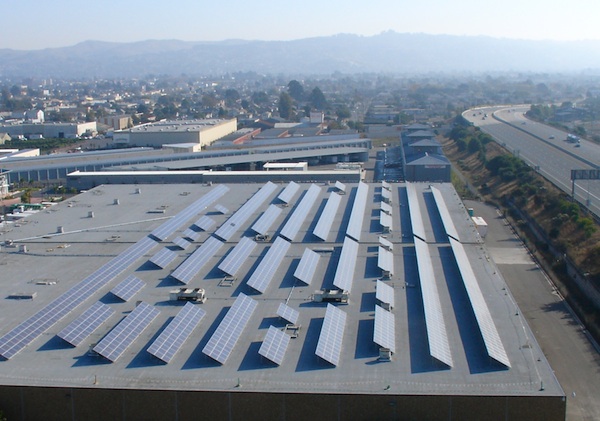
The huge 500-kilowatt solar installation at the Bay Area Beverages building, which you can see while driving west on 580 just before the Canal Boulevard exit, is quickly becoming a landmark. This solar installation, along with 52 others in Richmond, was one of the reasons that the Northern California Solar Energy Association recently gave the city an award for installing more solar watts per capita than any other large city in California. “I think the category that Richmond won is one of the best metrics to win,” said Adam Lenz, sustainability coordinator for the city of Richmond. “It just shows in an even playing field amongst cities, regardless of size, who is pulling their weight the most by installing renewable energy.” Based on the 2009 Bay Area Solar Installations Report, the Northern California Solar Energy Association, on July 14th awarded prizes to Richmond and other Bay Area cities for their adoption of solar energy. Richmond won two awards in the large city category: first place in watts per capita installed and second place in total watts installed. The report shows that the Bay Area leads California in new solar installations. Since 2007, with the launch of the California Solar Initiative, a state incentive program, the total number of systems and total megawatts installed have almost doubled and tripled, respectively, for both California and the Bay Area. According to PG&E, since 2007 Richmond has completed 94 solar installations through the California Solar Initiative. According to the report, although California’s overall rate of photovoltaics installations remains strong, it has declined slightly since 2008, due at least in part to the economic downturn impacting California. Last year, however, the Bay Area showed remarkable growth relative to the rest of California, encompassing 61 percent of the state’s new installations and 55 percent of the total megawatts installed. Richmond appears as a leading large city in the report with the most watts installed per capita —34.77. For total watts installed between 2008 and 2009 Richmond had increased by 399 percent. Lenz said that he was quite surprised that Richmond won the award. “In general Richmond has not necessarily had the best press when it comes to environmental issues,” he said. San Jose won first place for total amount of solar watts installed, and Richmond won second place. “That’s amazing because we are not even the largest city in the Bay Area.  There are other cities in the Bay Area that are many times the size of Richmond, yet we, over-installed them in 2009,” said Lenz. According to PG&E, in Richmond there were six new residential installations in 2007. In 2008 there were 18 residential installations and three non-residential. In 2009 there were 44 residential and 9 non-residential. So far in 2010 there have been 13 residential and 1 non-residential new solar installations. Most solar installations in the state and Bay Area are residential — 93 percent — and the rest are commercial, government and from nonprofit organizations, according to the 2009 report. But in Richmond, the large, non-residential installations generate most of the city’s solar power. “Large installations got us to the watts per capita and we got the award,” said Michele McGeoy, the Executive Director of Solar Richmond, a nonprofit that provides solar installation and training. She said that in Berkeley, which was awarded first place for the number of systems per capita, residents probably installed smaller systems. McGeoy thinks that when businesses choose solar it is because they care about doing something that’s good for the environment. “It’s also is an economic decision because they save money over time,” she said. The 2009 Bay Area Solar Installations Report listed several reasons for the adoption of solar power in the Bay Area: “solar-friendly utility rates, net metering, ample sun exposure, supportive local, state, and federal government programs and legislation, and a strong environmental ethic.” For Richmond whether it’s a business, residence or non-profit the incentives include a 30 percent federal tax credit called the Solar Investment Tax Credit. At a state level, the California Solar Initiative rebates 65 cents per watt installed for residential accounts. Several programs are also available to help those interested in installing solar systems. State-funded programs such as Smart Solar provide free third party technical assistance to Richmond residents and businesses. Rising Sun Energy Center manages two residential energy efficiency programs in Richmond: California Youth Energy Services and Green Energy Training Services. Grid Alternatives provides free and discounted solar installations to low-income families through the Single-family Affordable Solar Homes program, which is funded by the state. The city of Richmond doesn’t yet provide any incentives, like rebates, for installing solar systems, although it does not charge residents for a permit fee for solar installations. The city also supports programs that encourage solar energy use and installation. One of the city programs is RichmondBUILD, a green jobs training academy that started in 2007. Trainees from RichmondBUILD get skills for installing solar through training at a nonprofit/program called Solar Richmond. “Solar installation creates more local jobs,” said Lenz. “We have a history of being a blue collar city and we are transforming into a green collar city.” Sunlight Electric, LLC, a solar company from San Francisco, hired workers trained at RichmondBUILD and Solar Richmond to install the solar system at the Bay Area Beverages building. Rob Erlichman, CEO of Sunlight Electric, said that his company wanted to support the Richmond community. “What was great about the Richmond Solar Program was that we were able to utilize a pull of solar-trained local people,” Erlichman said. The city is also making other efforts to generate more renewable energy. Over the last three years, the Richmond Redevelopment Agency installed 24 solar photovoltaic systems on low-income Richmond homes as part of a low-income solar installation program. Last year the city installed solar panels on City Hall and the Richmond Memorial Auditorium. The library also has 75 kilowatts of solar installed. This summer the city will release a request for proposal to increase solar capacity in city facilities with the goal of eventually providing 50 percent of municipal power from local, renewable energy. “We’re going to use this as an opportunity

Richmond leads the Bay Area in solar power wattage per capita Read More »

Volunteers start campaigning for mayor’s race

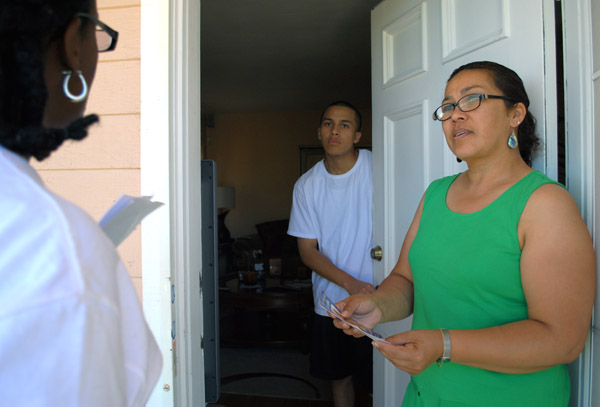
On the first Saturday morning that has felt like summer in Richmond, a group of volunteers hit the city’s neighborhoods to knock on doors and talk with people. Their mission: Get Mayor Gale McLaughlin reelected in November. This was the first precinct walk for McLaughlin’s re-election campaign. About 40 volunteers gathered at the office of the Richmond Progressive Alliance, a non-partisan liberal group that supports both Mayor McLaughlin and Jovanka Beckles, a Democrat who is running for City Council, and who shares many political ideas with the Green Party mayor. The volunteers were of all ages and backgrounds. Their goal was to talk with as many Richmond residents as they could. “This is not a ‘me’ campaign, this is going to be a ‘we’ campaign,” Beckles told the volunteers. “We have to come together to become one Richmond,” she said, and the volunteers cheered. “We are here today because we will not be pushed back,” said the mayor, who spoke about her accomplishments over the last four years as well as about future campaigning challenges. “Just as Chevron has spent thousands of dollars in the past to defeat our efforts, we expect it to happen again,” she said. Since both candidates are proud to say that they don’t receive corporate donations, a grassroots campaign is key for them to win the election this coming November. McLaughlin said that their campaigns will only take donations from ordinary people, progressive organizations and unions. “We support responsible corporations but don’t take their donations,” she said. According to the mayor, there were hundreds of people involved in her campaign during the last election in 2006. “We expect to have more because we see it as a continuation of our previous efforts,” said McLaughlin. On Saturday, the mayor had other city council obligations and couldn’t join the precinct walk, but Beckles did. She started in the Richmond Heights neighborhood, where she lives. Whether they had met her before or not, the neighbors were receptive. They listened attentively and took the handouts with information that were given to them by Beckles. She made notes about who agreed to post window and/or garden signs for her and McLaughlin’s campaigns. Beckles made sure to mention how she and McLaughlin stand for the same principles of “community empowerment” and that they aren’t taking corporate donations. “You know what happens when corporations have way to much power over politicians. It doesn’t usually works out in the best interests of the community,” Beckles told a neighbor who responded, “It’s not going to stop in Washington, is it?” They broke into laughter, then began to discuss the need to start change at a local level. Silvia Hopkins, a member of Communities for a Better Environment, a non-profit organization with a focus on environmental health and justice, walked precincts to campaign for McLaughlin in the 2006 election and is doing it again this year. “She is known for representing the interests of the people in this city,” said Hopkins before going out to campaign door to door. Is not clear yet who will be officially running for mayor in November’s election —the hopefuls have until July 12 to officially declare their candidacy — but both Beckles and McLaughlin feel optimistic about winning. Beckles ran for City Council for the first time in 2008. “It was a very close election, I lost for something like 400 votes,” she said. She added that at that time not many people in the community knew her, but now more people do so she expects to have a better outcome. McLaughlin is California’s first elected Green Party mayor. She said she’s gotten support because in Richmond people had struggled for decades and they didn’t see any progress. She thinks that’s why she was elected and will be re-elected. “People had been ready and are now actively and vocally ready for change,” she said. June 15, 2010 Richmond Confidential

Volunteers start campaigning for mayor’s race Read More »

Latino laborers show support for Point Molate project

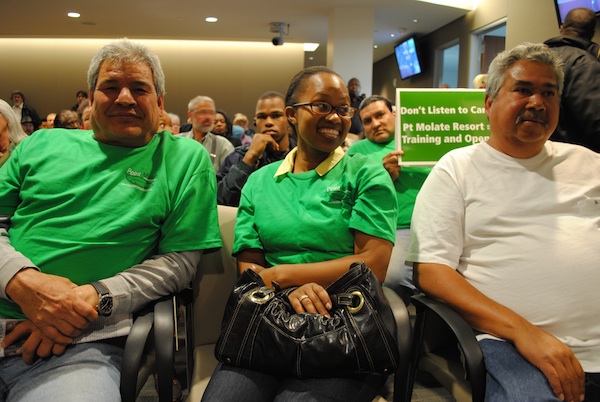
At the Richmond City Council meeting this past Tuesday, most of the Latino residents in attendance were wearing green T-shirts supporting the controversial building of a casino in Point Molate in the hope that it might create new construction jobs. The casino project is supported by  Union Labor Local 324, and the construction workers who belong to the union are almost all Latino and African-American. “The casino is going to bring jobs to Richmond,” said Ruben Salazar, a 55-year-old laborer and resident of North Richmond who has been unemployed for a year.  Salazar is a member of Union Labor Local 324 and so are the friends who sat next to him during the council meeting. Laborers who are facing unemployment, like Salazar, see the casino project as hope for future construction jobs. They support the creation of jobs more than the idea of the casino itself. “We go to council meetings because we need a job,” said Antonio Sanchez, another union member who is facing unemployment. Salazar and Sanchez said that they learned about the council meeting through word of mouth. Both got their T-shirts from the supporters of the casino who had a table outside of the Community Services Building where council meetings take place. Nearby, a group opposing the casino project had a table too; both groups were giving away sandwiches, pamphlets, signs and sodas. “Why oppose it if it’s going to bring jobs?” asked Salazar, referring to the group that is against the project. Salazar and his wife, the parents of four children, are not working. The unemployment insurance money that Salazar gets is their only income. “If people don’t have the means to make ends meet, they are going to find other ways,” said Salazar, he fears that the crime rate will climb if unemployment in Richmond continues to rise. But not all Latinos at the meeting supported the casino idea. One of the few Latinos that spoke up against the casino project was Andrés Soto, a member of the Richmond Progressive Alliance, a non-partisan liberal group. Soto is a 54-year-old musician employed part time. “Not all jobs are good jobs,” he said. Soto alleged that developer Jim Levine of Upstream, which has partnered with the Guidiville Band of Pomo Indians to turn what used to be the Point Molate Naval Fuel Depot into a casino-hotel resort, had organized the leaders of the labor unions in order to get people of color show their support for the project. The T-shirts given away by Upstream promised “17,000 new jobs.” But Soto contested those figures. “The number of jobs has been inflated,” Soto said. He also said that Latinos, who have been hit hard by the recession, are vulnerable to believing a sugar-coated story that promises jobs. Salazar and other members of his union were a strong presence at the beginning of the council meeting, which started off with a full house. Some attendees were standing unable to find chairs to sit down. But the number of attendees faded away as the meeting stretched past midnight. At 10:00 pm the council started discussing the city’s right to explore various development alternatives for the Point Molate site. Mayor Gayle McLaughlin read part of a 2006 settlement agreement that stated that the city had the right to look at other projects. But by this point, more than half of the attendees had left. Salazar, who left a few hours into the meeting, was unaware of the possibility of other projects. When later asked if he would support a different plan, he said, “If it brings jobs and we are all content, I would support other projects.” May 20, 2010 Richmond Confidential

Latino laborers show support for Point Molate project Read More »

Neglected pipes result in rate increase

Starting next July, sewer rates for residents within the Richmond Municipal Sewer District will go up 5 percent annually until July 2014. The rate increase will affect about half of Richmond residents, including more than 16,000 single-family residential units and approximately 2,000 multifamily residential units and 2,000 commercial units. The rate fees for the Richmond Municipal Sewer District started climbing in 2000 and haven’t stopped ever since. In 2000, the annual fee for a single unit residence was $195. Today it is $506. With the fee increase it will be $633 in the year 2014. Chad Davisson, city of Richmond’s wastewater manager, said that the city needed to increase the rates because the sewer system is so old. Richmond’s Water Pollution Control Plant at 601 Canal Boulevard was built in 1953 and the pipes are 60 to 90 years old. Much of the city’s infrastructure is at the end of its service life; that’s the cause of sewer spills into the bay, he said. According Davisson, in 2009 there were 22 spills—a total of nearly 2.2 million gallons. So far in 2010 there have been 36 spills, a total of 12.3 million gallons. Davisson said that the rate increases since 1999 have been to pay for projects to fix the Richmond Municipal Sewer District plant and the city’s sewer collection system. Since 1999, the city has spent approximately $51 million on different projects related to the upgrade of the collection system, plant or its administration. At least $11 million of that has been spent on plant improvements. The upcoming rate increase, however, will help to fix only the collection system, not the plant, said Davisson. The increase is to pay a $30 million bond to rebuild the infrastructure. The upgrades are mandated as part of a 2006 settlement between the city of Richmond and Baykeeper, a nonprofit environmental watchdog based in San Francisco. In 2006, Baykeeper filed a lawsuit stating that the City of Richmond had been spilling hundreds of thousands of gallons of raw sewage into the bay every year. The city agreed to reduce spills 90 percent by the year 2014. Davisson said that having an old collection system that needs to be fixed is a problem that affects many Bay Area cities. “Discovery Bay, San Carlos, Vacaville are raising their sewer rates,” he said, citing a few examples. Deb Self, the executive director of Baykeeper, agrees with Davisson that many cities have sewage leak problems. (Click here for a Google map that shows the sewage system overflows in the Bay Area.) In fact, this year, Baykeeper sued Alameda, Albany, Berkeley, Emeryville, Oakland, Piedmont, and the Stege Sanitary District (which serves Kensington, El Cerrito and part of the Richmond Annex) for illegal sewage spills. The nonprofit alleged that these cities are accountable for leaky sewage collection systems that inundate the East Bay Municipal Utility District (EBMUD) treatment plant with massive amounts of rainwater and sewage and cause major spills in the bay. While EBMUD is responsible for wastewater treatment, it does not own, and therefore cannot repair, the cities’ collection systems. Some residents blame Richmond’s recent sewer rate hikes on Veolia, the French multinational that contracted with the city of Richmond to take over the treatment plant in 2002. Two years later the city contracted it to run the collection system as well. Charles Smith, a retired Richmond resident who worked for EBMUD for 25 years as a wastewater operator, is the Richmond plant’s most outspoken critic. He said that instead of contracting with Veolia, the city should have accepted EBMUD’s proposal eight years ago, which was to close the Richmond plant and build a pipeline—at no extra cost—that would take the sewage to their plant in Oakland. Smith said that if the city had contracted with EBMUD on the first place, then it wouldn’t have to charge residents to fix an obsolete plant. Before the city approved the rate increase, Smith produced fliers claiming  “Sewer tax hikes mean big profits for Veolia at ratepayers’ expense.” But Davisson says rate hikes are caused by the need for repairs and have nothing to do with the company’s profits. “Sewer rates increases don’t go in Veolias’s pocket,” he said. According to Davisson, Veolia’s contract with the city is a fixed fee contract and the increased fees go to pay for the projects, not to Veolia. Davisson said that the city is considering the possibility of working with EBMUD in the future. However, based on a study by Carollo Engineers, building a pipeline from Richmond to the EBMUD plant in Oakland could cost as much as $95 million. That is more expensive than making improvements to the current treatment plant, said Davison. EBMUD engineer Ben Horenstein, who headed the bidding for EBMUD eight years ago and is now the utility’s manager of wastewater environmental services, said that while the $95 million estimate for EBMUD to build the pipeline “seems fairly high to me,” things have changed since 2002. “I don’t know if EBMUD can replicate the proposal we made 10 years ago about not charging for the pipeline. Those are decisions that will have to be made by our board,” Horenstein said. Horenstein said that EBMUD would have to do an engineering analysis to see whether they are even able to handle additional flows from Richmond to the EBMUD plant. Davisson said that many other Bay Area cities are now facing similar problems with outdated infrastructure.  “This is not unique to Richmond,” he said. “The Bay Area is very old and a lot of the communities are dealing with the same issue.”  July 30, 2010 Richmond Confidential

Neglected pipes result in rate increase Read More »

Dust and Illusions and More at Roxie DocFest

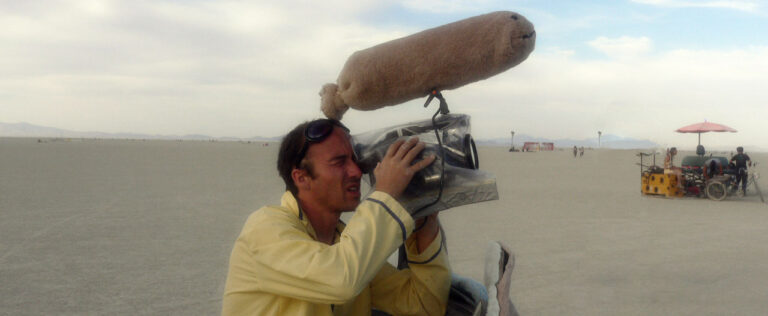
The Eighth Annual San Francisco DocFest opens this Saturday at the Roxie offering two weeks of more than 50 nonfiction films and videos including a film produced by Olivier Bonin, a Mission resident. Bill Banning, one of the DocFest programmers, said the documentaries chosen for the festival can be fun or serious but must be entertaining. The following are three of his favorites: The Great Contemporary Art Bubble, a film produced by British filmmaker Ben Lewis, shows how dealers and artists can manipulate the art market. The film follows the booming contemporary art market from its peak in May 2008 until its collapse last September. “Since it’s a film about art, the way it was shot it’s visually stunning,” said Banning. Sun., Oct. 25, 7pm, and Wed., Oct. 28, 7pm. Mine, by Geralyn Rae Pezanoski, is an emotional film about the pets left behind after Hurricane Katrina, the owners forced to abandon them and the adopters who may have to return them. Fri., Oct. 23, 7pm, and Tues., Oct. 27, 9:15pm. Mitch McCabe is the daughter of a plastic surgeon and the filmmaker behind Youth Knows No Pain. McCabe interviews doctors, experts and patients who have under gone plastic surgery. “It’s a personal documentary and the filmmaker puts herself in the middle,” said Banning. Sat., Oct. 24, 4:45pm, and Mon., Oct. 26, 9:15pm. Another 48 documentaries are featured including six short films and two long-format films from Bay Area filmmakers. One of the local filmmakers featured this year is Olivier Bonin, who has lived in the Mission for 11 years. His film, Dust and Illusions, is about Burning Man, an annual event held in the Black Rock Desert in Nevada. “I thought it was going to be easy,” said Bonin, a first-time filmmaker who started working on the project in 2004. It took five years to finish. “When I was producing this film I had to see other productions about Burning Man, and they were so bad that I was happy I was doing something different,” said Bonin, who is 36 years old. His film has footage from festivals of the last 30 years. Sat., Oct. 17, 9:15pm, and Thurs., Oct. 22, 7pm. For complete schedule and directions go to www.sfindie.com Mission Local OCTOBER 17, 2009

Dust and Illusions and More at Roxie DocFest Read More »

Composting goes big in Richmond starting July 1

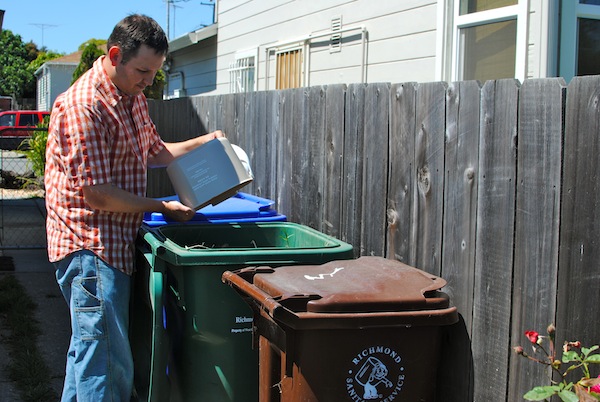
More than a hundred Richmond residents were happy to get a free food scrap pail during the Juneteenth event on June 19th at Nichol Park. The environmental staff from the Manager’s department of the city was handing out pails to promote its new food scrap collection program that makes it possible for residents to mix food leftovers and yard trimmings to be composted. “I can’t wait,” said Victoria Weatherbee, a Richmond resident, to a neighbor about being able to start composting. The city of Richmond is moving forward with two initiatives for composting beginning on July 1. Starting then, styrofoam and plastic food to-go containers are no longer going to be used for food prepared in Richmond. All food providers including restaurants, mobile food vendors, delis, gas stations, nonprofit organizations, public events, and city facilities will be required to give away compostable food containers, including tableware such as spoons, forks and knives. The exceptions are straws and lids. Additionally, residents will be able to have food scraps and other compostable items picked up from their homes for transport to a composting facility. The food scrap collection program Residents of Richmond currently divide their refuse between three waste carts that they leave on the curb for pickup. The brown cart holds regular garbage, the blue is for recyclables and the green is for yard waste. Starting this Thursday, the rules have changed for the green cart. While residents can still use it to dispose of yard waste such as twigs, flowers, grass and yard trimmings, now residents may also put food wastes and compostable items into it. Accepted items include fruit, vegetables, bread, pasta, meat, bones, dairy products, eggshells, and coffee grounds. Additionally, biodegradable materials such as coffee cups, paper plates, paper bags, napkins, tea bags and milk cartons may be added to the green cart. People who compost in their own backyards are often advised to not put meat, bones, dairy products or seeds in their compost, it is fine to put those types of food scraps in the green bin, because it will go to a composting facility that will break it down into soil faster than a home backyard composting bin. “You can put anything in the green cart that was alive at one point in time. Anything that is from a plant, tree or animal that can decompose,” said Adam Lenz, Sustainability Coordinator for the city of Richmond. Lenz said that the city’s goal is for residents to put as much accepted material into the green bins as possible. According to Lenz, the amount of compostable material a household produces depends on the lifestyle of its residents. A resident could divert up to 40 or 50 percent of the waste that goes into their trashcan by using the green cart and could therefore save on their garbage bill. Lenz said that 80 percent of West Contra Costa County residents have a 35-gallon trash cart — if they are able to transition to putting their food scraps to the green cart, they might be able to use a 20-gallon mini can instead and pay less monthly. Click here to see the payment options depending of the size of the cart. The food scrap pail In between pickup days, residents can collect items to be placed in the green curbside cart using the free food scrap pails that the city is giving out. These plastic bins allow food scraps and food-soiled paper to be stored in a resident’s kitchen before being added to the green cart on trash day. Food scraps wrapped in newspaper or a paper bag can also be added to the green cart, but plastic bags will not be accepted. Food scrap pails have been handed out at different public events and will continue to be given away during events at City Hall during which the environmental staff will talk about the program. Starting in mid-July, residents can come to City Hall anytime to pick up the bins. For more information call (510) 412-2096 or click here. Recyclables vs. Compostables The blue cart is still to be used for the materials that the Richmond Sanitary Service, the company that provides waste management services to the city, is able to recycle. These include aluminum cans, foil pans, plastic narrow neck bottles, milk and water jugs, water, soda, and juice bottles and clean paper and cardboard materials. Compostable materials such as food-soiled, waxed or dirty paper, and paper bags, containers, cups are not acceptable in the blue cart, but now they can be placed in the green cart. A lot of to-go containers offered by food providers include plastic cups, tubs and clamshell containers.  The Richmond Sanitary Service does not recycle those. The only plastics that are recyclable in Richmond are narrow neck bottles, which means that the mouth is smaller than the body. (Laundry detergent bottles are a good example.) The composted soil Once the program is up and running, the City Manager’s office plans to have compost giveaways for the community, so that people can use this soil in their backyard and in community gardens. “We are excited to bring it back to the community, because when people get it back that is truly connecting the loop and getting the people excited about filling up the green bin with the best materials,” said Lenz. According to Lenz, much of the composted soil will also be sold to farms and vineyards in California that will use it instead of synthetic fertilizers and materials. “Vineyards notice that they can decrease their water consumption by 50 percent after using compost for three years, because of all the microbes,” he said. Richmond’s new composting program received a grant to fund outreach materials and kitchen sink pails from Recycle More, which is a joint powers agency that operates as the Waste Management Authority in West Contra Costa. San Francisco, Berkeley, Oakland, and Alameda have similar composting programs. The neighboring city of El Cerrito will start the same program this Thursday together with Richmond, and

Composting goes big in Richmond starting July 1 Read More »

Shopping Cart