veromundo.store

Officials Say Permitting for Vendors Outdated
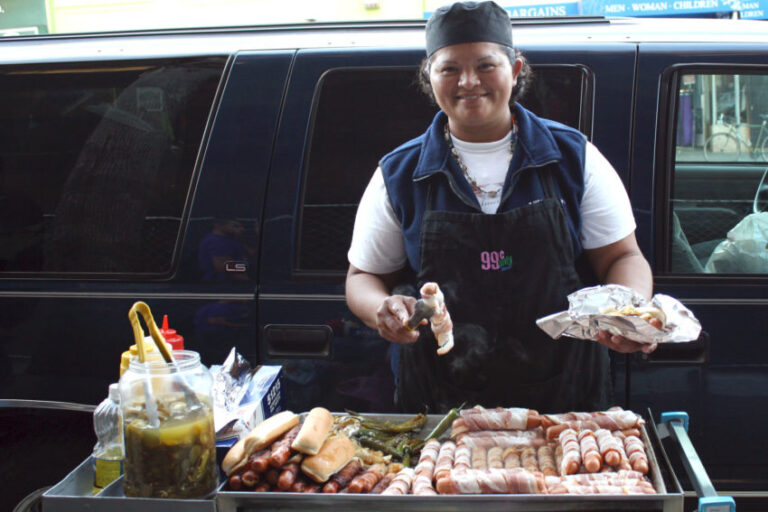
The night of Dia de los Muertos, Lucero Muñoz was selling her bacon wrapped hot dogs on the street when a policeman approached her. “‘I told you I don’t want to see you here,’” he said and asked her to turn over her cart. The onions, sausages, jalapeños and hot dogs ended up scattered on the ground. “I felt so humiliated,” said Muñoz, as she remembered the incident. But that, she decided in late November, would be the last time.  Dressed up and feeling happy and nervous at the same time, Muñoz headed to City Hall. She had one goal — to get a street merchant’s permit — a piece of legitimacy that only 16 Mission carts hold, according to Alfreddie Steward, the administrative permit officer for the San Francisco Police Department. While the hipster street cart vendors of the Mission District get invited to official functions, many who have long worked the Mission’s streets are more likely to get a $250 ticket than an invitation. Officer Steward estimates that some 35 to 40 vendors operate in the Mission District without a license. Muñoz is one of them and in the past two years she’s gotten ten tickets. Her trip to become a legal vendor offers a lesson into what even city officials call an outdated permitting system. “There is an underground economy of street vendors because permitting by the city is nearly impossible,” said Martha Yanez, Business Case Manager at the Small Business Assistance Center. Yanez works one on one at the Office of Small Business in City Hall and says the odds of getting a permit fail to favor the many merchants who walk into her office every day. “I don’t want to discourage them,” said Yanez. “The best I can do is explain the procedures so they don’t enter the process blindly.” In that spirit Yanez sat with Muñoz at a small round table inside the Office of Small Business to explain the procedures. The first step for Muñoz would be to go in person to the Police Department at 850 Bryant Street and file an application for the Pushcart Peddler Permit. Getting one is particularly difficult because the street merchant has to locate two blocks or 600 feet away from an established business selling the same type of food. Meeting that requirement in the Mission is nearly impossible because of the number of existing establishments. “The officer that processes the permit is the one that decides what is considered the ‘same type of food,’” said Yanez. “Maybe there is a grocery store nearby. That can be considered the same food and the permit would be denied.” The application also requires a $594 non-refundable fee. According to Officer Steward, police let vendors apply more than once under the same fee. “We don’t have to, but if the application is denied, as a courtesy, we let the person apply once or twice again without paying the fee,” he said. Even if a merchant gets the Pushcart Peddler Permit, the second step is also daunting: the health department’s permit. To get one, food vendors need to show that they are cooking their food in a licensed kitchen, Yanez said, “There is no such thing as a home licensed kitchen.” Once they have the health permit, the other requirements — a business license, registering the business and getting a sellers permit — are straightforward. After one hour, Muñoz left the Office of Small Business with a load of papers, brochures and her attitude still intact. “I won’t get discouraged,” she said to no one in particular, but wondered aloud if she would be able to get a license. Only a few do. One is Maria del Carmen Flores, who sells a variety of pupusas, tamales and plantain chips. She also distributes her products directly to restaurants. Flores got her health permit by using the kitchens at La Cocina, a non-profit that rents licensed commercial kitchen space at an affordable rate. She uses the kitchen three days a week and pays from $650 to $770 monthly. “I’m always grateful to the ones that had helped me,” said Flores referring to La Cocina and the non-profit Women’s Initiative. Flores is one of 35 small businesses that use La Cocina, but “hardly any of them are street vendors because it’s so hard to do,” said Leticia Landa, Program Associate of La Cocina. Flores, for example, only has a health permit because she sells in farmers markets or directly to restaurants. This means she doesn’t need a Pushcart Peddler Permit. Yanez says it’s not the fees street cart vendors complain about, but the difficulty of the process. She often hears from them “‘We’ll pay but just give us the permits.’” Officer Steward from the Police Department acknowledged that the restrictions on permits are difficult. “Some of the rules are old and need to change,” he said, but added that it wasn’t up to the police.  “It’s not the police that write the rules, we just enforce them.” Sandra Murillo who works for Women’s Initiative as a small business consultant said she understands that the Health Department is defending consumer rights by imposing regulations, but added, “It is devastating for the merchants when their food gets thrown away. Yanez said there are so many informal vendors that it would be smart for the city to find a way to formalize them. “Customers are interested in buying and merchants are interested in selling. If the street food remains underground the city loses.” La Cocina agreed and said the interest in street food is only growing. This past August 22nd, La Cocina organized the San Francisco Street Food Festival. Thirty vendors participated. Some were people that use the kitchen at La Cocina, others were local restaurants and the majority were informal vendors that for the first time had a space to sell their products legally. Muñoz was among them selling her bacon wrapped hot dogs. The event went from 11:00 am to 7:00 pm and was a success. “Crowds of people showed up and there were long lines of customers,” said Landa,

Officials Say Permitting for Vendors Outdated Read More »

Dianda’s Bakery Maintains Its Traditions

Since his infancy, the strong and sweet smell of freshly baked pastries has invaded the apartment Sergio Flores and his family rented above Dianda’s Bakery on Mission Street.  His father worked as a baker and as a little boy, Sergio would come down the stairs to be close to his father and spend time with the bakers. Flores is now 26 but the sweet smell of his childhood remains in his life. The Italian Dianda family, who opened the bakery in 1962, sold it six years ago to his father and two other bakers. Today, the three co-owners still wake up as early as 2 a.m. to bake. Flores remains near his father, working behind the counter. “I like working here because you see people grow older,” the young Flores said, referring to the customers whose loyalty to the bakery has passed from generation to generation. “My mom has been coming here for 40 years,” said Margaret de la Cruz, who remembers her mom buying cakes from Dianda’s when she was a little girl growing up in the Mission. Now, de la Cruz, 38, has two little girls of her own and returns to her childhood neighborhood only for the bakery. When Floyd Goldberg, Sergio Flores and Luis Peña bought the business in 2004, they kept the same employees, the same routines and the same Italian recipes. But they did add a few things. “We had to add the Torta de tres leches,” said Goldberg, referring to the light, spongy cake popular among Latin Americans. They also added pecan torts and brownies. “This is my famous New York Brownie with walnuts,” said Goldberg, a Brooklyn native. When asked why it is famous, he said, “I use quality products, fresh walnuts and I do the mix from scratch.” Mina Urrutia, a senior who preferred to keep her age a secret, came all the way from her home in Daly City to buy a pannetone. Dianda’s has the traditional Italian Christmas cake throughout the year. “This is my favorite place to buy pastries. I always come here to get something,” said Urrutia, who lived in the Mission 50 years ago. Dianda’s tradition is kept by the co-owners, but just in case, Pascuale Dianda, one of the previous owners, still bakes on Wednesdays and Thursdays at 5 a.m. he 66-year-old started baking when his father Elio bought the bakery 47 years ago.  In those days, he said, the Mission was filled with Irish, Italians and Germans. He was only 18, but became his father’s trusted right-hand man because unlike his father, he spoke English. His father left the family’s hometown of Lucca in Tuscany after World War II and brought his skills as a pastry chef to America. He bought a bakery that had existed since 1906 – a time when trains still ran through the Mission. “We worked 70, 80, 90 hours a week,” Dianda said, recalling the work it took to succeed. When the Dianda brothers where ready to sell in 2004, they made it possible for their employees to buy the business. “Our tradition will be kept with these guys,” said Dianda. Nowadays, the bakery still has the inscription “Elio Dianda & Sons” at the entrance. The walls still have some black and white pictures of Enrichetta and Elio Dianda, the founders who passed away in the 1970s and 1980s. In one photograph, the brothers Armando, Floreano and Pascuale look young, wearing their white aprons and working with the dough. “I still get a lot of phone calls at home for orders,” said Dianda, who lives in Redwood City. He tells them to call the bakery instead but enjoys being involved. When the bakery was sold, he agreed to consult and help with administration and accounting for a year.  That was nearly six years ago.  “They don’t want me to go away,” Dianda said. “He is number one,” agreed Leean Tuscanelli, pointing at Dianda. Tuscanelli is the manager and an employee who has been working at the bakery for 30 years. There are other longtime employees who work behind the counter. Mirella Mora has worked for 16 years at the bakery and Maria Gomez for 18 years. “We knew them when they were not the owners and we got along pretty well,” she said referring to the new co-owners. “We are a union shop,” said Dianda. The bakery has two unions, one for the bakers and one for the clerks. “That has been my philosophy behind the business, to treat employees well.” “The owners are always motivating us and they are understanding that we have families,” said Martin Gallegos, who has been making deliveries for the bakery for four years. He thinks the pastries are delicious and sees a future in his job. Dianda’s Bakery, he said, has yet to experience any layoffs and it’s unlikely that there will be any with the holiday season just starting. “You can see a line of people trying to get in during holidays,” said co-owner Goldberg. “During Christmas the line goes all the way to the corner,” Tuscanelli added. Mission Local NOVEMBER 17, 2009

Dianda’s Bakery Maintains Its Traditions Read More »

School district celebrates English proficiency achievement

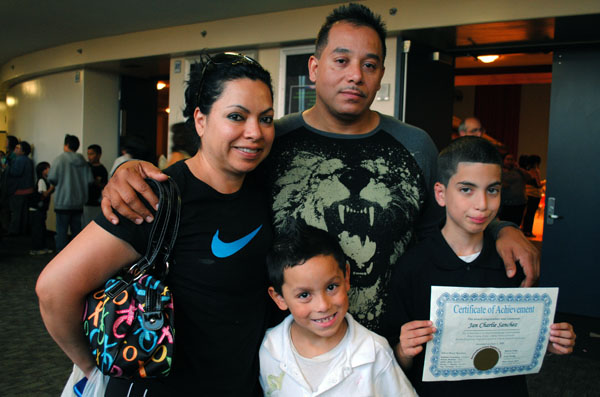
When she was in the first grade, Yassna Ahmadi had a hard time understanding her classmates and teacher. At home her family only spoke Farsi. Now a third grader, Ahmadi just won first place in a writing contest and read her essay in front of an audience, speaking flawless English. “As some of you may know, I was born in Berkeley, California but my parents came to the United States from Afghanistan many years ago,” she read from her essay. The child of immigrant parents, Ahmadi is not alone, especially in the West Contra Costa School District, where one third of the students are non-native English speakers. Because so many of its students are English learners, the district organizes the Annual Reclassification Award Ceremony. This event celebrates the accomplishments of children have been “reclassified,” which means that the kids have become fully proficient in English and are no longer considered English learners. On Tuesday, hundreds of immigrant families supported their children at the 11th such award ceremony. More than 900 kids received their diplomas this year and the winners of the 2010 school district essay contest read their work aloud at the Richmond Civic Center Auditorium. “Proficiency in English as a second language is a great effort and shows hard work,” said Marin Trujillo, Community Engagement Coordinator for the school district. “This school district is the only one in California that organizes an event of this kind,” said Trujillo, pointing out that the achievement of English proficiency is often overlooked. To achieve reclassification, the school district considers at a number of elements. “We look at the whole picture,” said Susan Dunlap, the district’s English Learner Service Coordinator. The students have to pass the California English Language Development Test and the California Standards Test. The district requires an essay written at the fluency level of a native English speaker. The students also need to learn grade-level content taught in English and their parents are consulted about their kids being ready for reclasification. “It’s challenging to learn math and science in a language in which you are not proficient,” said Dunlap. She explained that English learner students get academic support from the schools until they are reclassified. According to the 2010 school district census, 9,556 out of the district’s 30,000 students are considered English learners. There are 75 different languages spoken among them, but 82 percent of the students speak Spanish. The most commonly spoken languages after Spanish are Filipino, Vietnamese, Punjabi, Mien, Arabic, Cantonese, Lao and Urdu. Students who identify themselves as Latino make up 52 percent of the district’s students. However, a student who speaks a language other than English as their native language does not necessarily need to be reclassified. Some students are already bilingual and proficient at both languages, explained Dunlap. According to Dunlap, reclassified students from the West Contra Costa District do better on the California High School Exit Examination than all other student groups in the district. Last year 92 percent passed, the highest pass rate in the county and state for reclassified students. “We believe that they are well prepared to continue their studies,” Dunlap said. At the award ceremony, the presenters spoke in both English and Spanish or used a translator, making it a bilingual event. “Kathryn got into first grade and she didn’t know any English,” María Anchante, a Peruvian seamstress and single mother said in Spanish, of her 8-year old daughter Kathryn Navarro, who got a diploma at the ceremony. Anchante said that she speaks “very little” English, but that her daughter had a teacher who helped her after school. “She’s a great student. She’s always reading and writing,” said Anchante. “In the future, I would hope to be a writer. I want to write biographies,” said Navarro, satisfied with their achievement. Sometimes students get more help at home. That’s the case for Kevin Fereidooni, an 11-year-old student who is now officially proficient in English. His father, Nader, an Iranian immigrant would speak English to him as a baby and encourage him to watch cartoons on American TV. In the case of 5th grader Jan Charlie Sanchez, his father and sister speak English but his mother doesn’t. “During first grade I understood a little, but by second grade I understood everything, ” Sanchez said. His little brother Anthony is bilingual at the age of 6. During the ceremony family members cheered when each child got a diploma. “We are very proud that our son speaks perfect English,” Affra Valencia, Sanchez’s mother said in Spanish. June 4, 2010 Richmond Confidential

School district celebrates English proficiency achievement Read More »

The Mechanics Bank, a history shared with Richmond

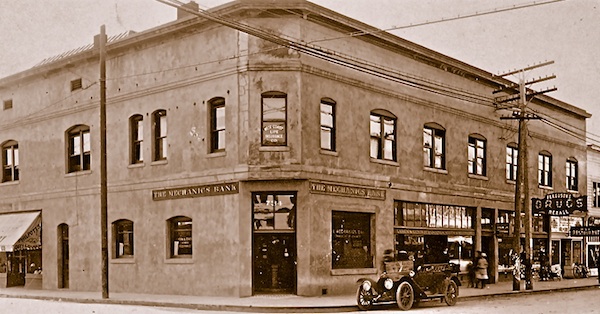
The story goes that back in the early 1900s, when workers were being paid with gold and signed warrants by marking an X, the railroad station agent in Pinole would go on a day-long, dangerous trip to Martinez to get their payment. That station agent was E. M. Downer, who created the Bank of Pinole. In 1907, he merged it with a financial institution in Richmond that soon was called the Mechanics Bank. “He wasn’t wealthy, but he was an entrepreneur and a charismatic man,” said Rauly Butler, the bank’s current senior vice president. Today, four generations later, Downer’s enterprise remains locally owned and a family majority-owned business. It kept its original name and it’s still a community bank. It’s Richmond’s oldest bank and the only one currently headquartered in Richmond, although it now has branches all around the Contra Costa County and in seven neighboring counties in northern California. At the end of last year, the Mechanics Bank had 670 employees; 42,977 personal banking clients and 9,664 business banking clients. The life, survival and success of the Mechanics Bank is closely tied to the history of Richmond, its hometown. During its early years, the Mechanics Bank was a place for local railroad workers in West Contra Costa County to cash their paychecks. These workers were called “mechanics” and that’s the reason for the bank’s name. The bank lent money so people could buy appliances such as refrigerators and freezers. “At that time, banks were not for the regular person,” said Butler. “Banks were known for lending money to businesses.” The Mechanics Bank was the first bank in the region to give personal loans. “Starting a bank for the mechanics — are you kidding? That was very unusual,” said Butler. But the bank served local businesses, too. During the 1920s, Richmond was a West Coast industrial center, home to major facilities for Standard Oil, the Santa Fe Railroad and the Ford Motor Company. The bank provided financial services for the corporations and their employees. Butler said that during the Great Depression, the bank survived a time of massive bank failures around the nation because of the support of Standard Oil, the City of Richmond and Richmond’s newspaper. The leaders of these organizations let the community know that they had full faith in the Mechanics Bank and were keeping their money in it, which  encouraged people to trust the bank, said Butler. In the 1940s, World War II brought local prosperity to Richmond. The city became the home of Kaiser Shipbuilding and with the shipyards 70,000 new residents arrived. The Mechanics Bank’s assets quadrupled from 1941 to 1945, becoming a major financial force in the East Bay. But once the war ended, the shipyard workers were no longer needed, leaving tens of thousands unemployed. According to Butler, the bank made public through the newspaper that no homeowner would lose his house, and worked with borrowers to avoid foreclosure. The community helped the bank during the Depression years, so “the bank returned the favor,” Butler said. During the 1990s, the bank expanded beyond West Contra Costa County for the first time, opening offices in Alameda, Marin, Napa, San Francisco and Sacramento counties. Today, after the 2008 financial crisis, the Mechanics Bank is still in business. “We didn’t need to take TARP money,” Butler said, but acknowledged that the recession had an impact on the bank. “Interest rates are low and that affects every bank.” As a community bank, the Mechanics Bank focuses on loaning money to local individuals and businesses. According to Butler, it didn’t need follow the trend of securitization of real estate mortgages to remain competitive in the stock market  “If we would have done that, we would be out of business today,” he said. Even the charitable donations Mechanics Bank makes stay in the community. “They volunteer in our special events, and help us with fundraising. They are significant financial sponsors and provide a myriad of bank services,” said Rev. John Anderson, President of the Bay Area Rescue Mission, a non-profit that helps the homeless and impoverished in Richmond. Anderson said that the Mechanics Bank was involved helping the non-profit since it began 45 years ago. Decisions on how to manage the bank are still controlled by the Downer family. Early this month, E.M. Downer’s great-granddaughter, Dianne Daiss Felton, began serving as chairman of the board. Michael Downer, a great-grandson, serves as vice chairman. The bank prides itself on personable service, particularly its non-automated 800 number. “I love it. When you call, you get an actual person that helps you,” said customer Joshua Gutierrez. Customer Tina Scott, who works near the bank’s Point Richmond office, said that when the line is too long, the manager will take her deposit and personally bring the receipt to her work. “All the employees are very nice,” she said. The bank’s involvement with non-profits and record of reciprocity with the community hasn’t gone unnoticed. Last December, the Move Your Money campaign started encouraging people to transfer their funds from big banks to credit unions or community banks. Their site provides a link to a zip code look-up service to help consumers find “risk free” community banks. The Mechanics Bank pops on the list of recommended institutions. Butler says that Richmond’s oldest bank is still growing; this year the number of people opening new accounts at the Mechanics Bank has doubled. “I’m very proud of what the Bank does for the community, the customers’ trust and the financial stability offered,” Butler said. May 28, 2010 Richmond Confidential

The Mechanics Bank, a history shared with Richmond Read More »

Richmond now has its own seed-lending library

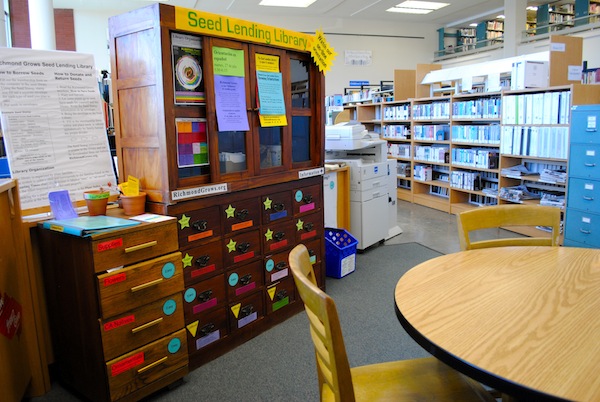
When Rebecca Newburn was volunteering at the Bay Area Seed Interchange Library in Berkeley, an organization that makes free seeds available to the public, she thought to herself, “I would like this for my community.” Newburn has lived in Richmond for eight years, and her work as a science and math teacher in Marin County hasn’t taken her away from being a long-time gardener. “I love the idea of checking out seeds,” she said. Together with other community organizations and volunteers, Newburn helped found the Richmond Grows Seed Lending Library, which opened just two months ago and is located at the main public library. Together with Catalin Kaser, she serves as the library’s coordinator. At the seed library, people can “check out” healthy seeds, use them to plant herbs, vegetables and flowers, and return new seeds from the resulting plants at the end of the season. The seed check-out process is self-service and it’s explained on the Richmond Grows website. Interested people can sign up for 45-minute orientations offered at the library several times a month and/or watch a 10 minute video at their websitethat clearly explains the process. This seed library is another effort that Richmond residents are making to grow food locally and build community, and Richmond’s is the first one in the nation to operate at a more traditional public library. “We put it in a public space because we wanted the entire public to have access,” Newburn said. The seed library is a collaborative project of the Richmond Public Library and the Richmond Rivets, a non-profit that promotes the local production of food, energy and goods. Newburn said that approximately thirty people had volunteered to make the library possible. “It’s a community effort,” she said. Meant to be a model for other communities, the Richmond Grows Seed Library have all its informational materials available for free to be downloaded from their website so other communities can start their own libraries of this kind. Even though the coordinators are still in the process of getting the library up and running, they’ve had media coverage already and the East Bay Express gave them the 2010 Best of the Bay Award for the best seed-lending library. Other community efforts to support more sustainable food and gardening are also growing in Richmond. Urban Tilth is a non-profit that supports urban agriculture in West Contra Costa County. It is the fiscal sponsor of Richmond’s seed library, and also has a number of other projects including the coordination of ten small farms and providing technical assistance to seven community and school gardens across Richmond and San Pablo. One of these gardens is around the corner from Deirdre Candelaria’s Richmond home, right up against I-80 at the intersection of Humboldt and Solano Avenue. Formerly a dirt lot that attracted garbage, Candelaria thought that it could be a great place for a community garden. Other neighbors were interested, too. Urban Tilth helped organize and plan the project and made donations of soil and plants. About 20 households participated in the making of what now is the Humboldt Edible Forest, a garden that has been growing for two years. Tomatoes, chamomile, cabbage, mint and blackberries are some of the things planted at the garden. People can take what they need and in exchange there is an unspoken agreement that they take care of the garden by planting, watering, cleaning or participating in workdays. “We take and take and take from the Earth and we haven’t learned how to give back,” Candelaria said, “If someone enjoys a fruit we ask that they find an act of service, for example picking up trash or watering, that feels like a good exchange.” Candelaria said that the experience of sharing a community garden has been sweet. “There is this one mother who would come out with her son—they planted this special pumpkin that they came and water every day,” she said. Candelaria recently found out about the Richmond seed library on the web and is looking forward to participating. “It’s great that people have access to the seeds for free,” she said. As with the Humboldt Edible Forest, the concept of “giving back” is also very important at the seed library, when people take seeds they are expected to return the seeds. The seed library wants to create four videos to educate people on how to save seeds from their new plants so they can return them at the end of the season. They are starting a “kickstarter fundraising” campaign to get the videos done. According to Newburn, seed saving had been a tradition in the past and hopes that Richmond residents can now revive it. “The seeds have value as food, but also they are connected to our family and our community,” she said. July 20, 2010 Richmond Confidential

Richmond now has its own seed-lending library Read More »

Artisan Market Alive on 24th

Diana Medina puts her dog Pacha in a backpack and jumps on her motorcycle. It’s Saturday and time for the Mission Artisan Market, where Medina has a silver-jewelry booth. “Before I owned a store, it was the artisans market that gave me the opportunity to sell my merchandise,” said Medina, recalling what life was like only a year and a half ago. Nowadays, the market’s only an extension of her Diju Jewelry store on 26th Street. The artisans market is where street vendors, artists and store owners like Medina sell their merchandise. They can come from as far as Peru and as near as Mexico. Every Saturday, they set up on the southwest corner of the 24th Street BART station, turning that corner into a space that, for many, offers memories of home. Vicky Valdez sells flowers at the market. From her spot, she hears the music and watches regular people break into spontaneous dance. “The sales aren’t always good but I like to come here because I feel happy,” she said. Merchants and customers were startled when, a few weeks ago, police officers visited and asked to see permits and identifications. “We were intimidated,” said Medina, who tried to answer an officer’s questions but wasn’t able to fully express herself in English. Vendors visited the Mission District police to explain who they are to Captain Steve Tacchini and clear up any misunderstanding. The officer who interrogated Medina didn’t know the market has been operating officially for almost two years. The idea of an arts and crafts market started with three Latino business owners and the help of the Mission Economic Development Agency, a nonprofit that promotes community economic development. “We wanted to create an organization for artisans and small businesses,” said Cesar Oyagata, an indigenous Ecuadorian artisan, and owner of G.G Tukuy on 24th Street, who has been involved with the market from the beginning. Along with other merchants the Mission Small Business Association was formed. In 2007, BART gave the association a permit to rent and operate as a market in their space. “Only after it happened we realized that we could do it,” said Sonia Ttito, from Qusqo Maky, a family-owned store on 22ndStreet. The association has only 16 members but has become well organized over time. It has a democratically elected board that rotates every year. This year Medina was voted treasurer and administrator. “We noticed that she was reliable,” said Oyagata, who was president during the previous year. Now a reality, the Mission Artisans Market attracts a good Saturday crowd. “It feels very cultural,” said Mano Castillo, a Nicaragu native who, like many others, stood mesmerized in front of a live salsa band in the market. “It is perfect,” said Lubia Ruiz, a passerby lured to the market by the music. She liked the Guatemalan handmade blouses, because she too was made in Guatemala. Latinos comprise the majority of shoppers, but many, like Ruiz, walk by and feel drawn to a space that reminds them of home. But the market appeals to others as well. “Every time I send a present to Europe, I send something Latin,” said Jette Vakkala, a Danish woman who dances salsa and lived in the Mission for 14 years. “I love the market. It adds life.” The idea at the outset was to sell only traditional handmade products from Latin America. But nowadays a few booths have emerged selling blue jeans, flowers and 20-minute Chinese massages ($15). The BART permit allows 12 spots for booths, so the association decided to allow other merchants in the vacant spots. Medina usually leaves her husband and Pacha to mind the booth while she collects the $40 fee that all the vendors pay every Saturday. She jokes with all the merchants. “I don’t know how but we understand each other,” said Medina about how she deals with the non-Latinos. “I get to practice my Spanish,” said Theresa Helton Lewis, who sells mass-produced jewelry. She and her husband are the only African Americans selling at the market. Two months ago, they got a spot. Lewis says the sales are “alright” and that she likes it there because “everyone is friendly.” “The manager is very nice,” said Susan Lom, from Hong Kong, who speaks little English but manages to communicate with Medina. She sells sunglasses and iPod cases at her booth. Lom doesn’t own a store but sells Mondays, Thursdays and Fridays at the Civic Center market. And so does Helton Lewis, the Chinese masseur, and a few others. There are also merchants who have other occupations and for whom selling on Saturdays is extra money. Margot Días from El Salvador has been in the market for two months selling jeans and purses but during the week she works as an attendant to elderly people. “Having your own business is the nicest thing because you make the decisions,” she said. Despite the diversity in the merchandise, the arts and crafts stand out. The colorful Peruvian-made purses hang next to the embroidered white Guatemalan dresses which hang next to shiny silver jewelry. Mariana Chuquin, an indigenous Ecuadorian, is a social worker during the week but on Saturdays she sells arts and crafts from Guatemala, Mexico and Ecuador. “I like it. I’ve been doing this all my life,” she said. In Otavalo, where she is from, there is a famous artisans market. Her people are known for weaving beautiful textiles and for being talented musicians and merchants. “If I just sit down in my store I won’t sell. That’s why I like to get out”, said Ttito from Qusqo Maky. Vendors agree that selling on Saturdays helps at a time when the economy is slow, and the location at the 24th Street BART station makes it easier to build customers. Even though thefts happen, and the sales have good days and bad days, Medina keeps coming. She has her own store now but feels attached to the market where she started. For Medina and the others, the market is about business

Artisan Market Alive on 24th Read More »

Roses and an Immigrant Family

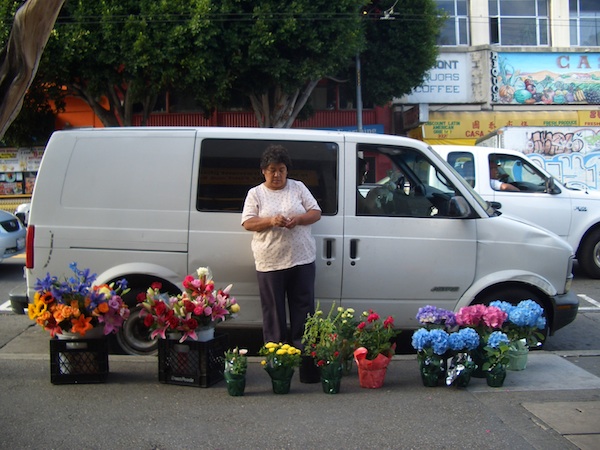
Hugo, a 19-year-old sophomore at UC Santa Cruz, knows the morning hours well.  Often this summer, he was up at 4:30 a.m. to help his mother pick up flowers in Salinas, Watsonville or Half Moon Bay. Once there, they would carefully stack roses, sunflowers, lilies, irises and orchids in the back of their old white family van before heading back to Oakland to make bouquets. Later they would sell the flowers at different sites in the Mission District and Oakland. “Since Hugo was eight he insisted to come with me to sell flowers,” his mother Lidia said. As the son of undocumented immigrants, Hugo’s school break is one not experienced by most Americans. That can be said for most of his life. Conveniences like a cell phone or a driver’s license are out of reach for Hugo — the cell phone because it’s too expensive and a license because undocumented immigrants are forbidden from holding one. “Even our social life is different. We don’t have money to go clubbing,” he said without bitterness. This year is particularly significant as Hugo and the estimated 3,500 to 5,000 other undocumented students attending California colleges and universities await the Supreme Court’s decision on the legality of AB 540. The 2001 state legislation allows undocumented students who meet specific requirements, including having spent three years in a California high school, to pay in-state tuition fees. The students, however, are excluded from seeking state or federal financial aid. “That’s the only way we can pay and we can barely afford it,” said Hugo, referring to in-state tuition that he cobbles together with scholarships and his earnings. The 2005 lawsuit was filed on behalf of out-of-state students who pay higher fees; it challenges AB 540 as a violation of federal law. Each year, 65,000 undocumented students who came to the U.S. as children with their parents graduate from high school. Hugo is among the 5 to 10 percent who pursue a college degree. In-state tuition is the only way he and others could consider going to college. “I understand their point but the reality is that we don’t have their privileges,” Hugo said, referring to the plaintiffs. He also says he realizes he has had more opportunities than his older siblings. On a recent ride to Half Moon Bay, Lidia remembered her first years in California when she didn’t get paid for months of work, or when the family had to split apart to find jobs. Her eyes filled with tears with the memory of one such incident when her older son Cesar was exploited and abused at the age of 10. A relative had promised to send him to school and take care of him in exchange for his help. The promise was a lie. “I was the best in my class. I wanted to be a doctor,” said Cesar, 28, recalling the past while sitting next to the flowers he now sells. Far away from his parents, Cesar had to work to survive. For his 2-year-old daughter and the baby his wife is expecting, he said, life will be different. Hugo is the family’s model for that different life. The youngest of Lidia’s children, he is the first in the family to go to college. “I was asked to join gangs, but my mom often talked to me about what is right and what is wrong,” he said. “I was never interested in joining.” A product of Oakland’s high schools, Hugo is studying health science and community studies, but wants to become a pediatrician. But during vacations it’s back to work at the family’s business. “Hugo helps me on Valentine’s Day or Mother’s Day. Anytime he has vacation he comes to work,” said Lidia. The truth is, she said, all her children have been hard workers. Hugo understands why his older siblings never opted for college. “If nowadays immigrant children aren’t aware of their options, just imagine 10 years ago,” he said. “They didn’t know.” In a good year, Lidia can sell anywhere from $30 to $200 in flowers a day. These past two years, sales have dropped to half that. Her husband returned to Mexico a year ago and it’s unclear if he will be back. Her other children have their own families and she works to support herself and help Hugo with tuition. In the meantime, Hugo hopes the Dream Act will pass. The federal Dream Act to put undocumented students on the path to legal residency was first introduced in 2003, but has never made it out of committee. Gov. Arnold Schwarzenegger twice vetoed the California Dream Act. Still, Hugo looks forward to the day when he can go from being an “undocumented youth” to a “legal U.S. resident” and have the right to access educational opportunities and work as a doctor in the community where he grew up. “I wish he can make it,” Lidia said. Mission Local SEPTEMBER 26, 2009

Roses and an Immigrant Family Read More »

Teens show their best at Richmond’s Got Talent Show

Teenage singers, dancers, a saxophone player and a band gave their best at the Richmond Memorial Auditorium last Friday during the Richmond’s Got Talent show, a competition for a $500 first place prize. The event meant to inspire creativity and promote talent among youth. “Faith and hope is what we intend to inspire in our young people,” said emcee AJ Jelani, in a speech kicking off the event. Jelani, who was also the coordinator of the event, is the acting president of the Belding Woods Neighborhood Council, which organized the talent show in an effort to steer middle and high school teens away from crime and violence by giving them a peaceful, creative summer activity. An audience of about 200 people cheered and applauded the fifteen performances, including some that went far beyond amateur level. One of them was the performance of Haley Slamon, who sang “When You’re Good to Mama” from the musical Chicago. She showed coolness in her singing and stage presence. “I started singing when I was three or four but I haven’t taken professional singing ever,” said Slamon who has performed in front of large audiences before. Other contestants were very new at performing, including 16-year-old Derlante Sims. “I just wanted to try for the first time on the stage,” he said. Sims loves music and singing, and he chose to perform “Summer Time” by Sam Cook. “The song makes me feel warm on the inside, so I wanted to sing that and let everybody know how it made me feel,” Sims said. David Hernandez, almost 12, was one of the youngest performers, and enchanted the audience with his hip-hop moves during a solo dance performance. “He created the choreography himself, ” said his mother, Patricia Valdivia after he finished his act. “I’m very nervous and very excited for my child,” she said, pointing out that her son was talented but he never had a mentor. After he finished performing Hernandez said that he would be happy if he wins, but if he didn’t he’d be happy, too, “because I danced, and I’m happy when I dance.” Although there was more hip-hop than any other music during the event, Kalin Freeman played Michael Jackson’s “I’ll Be There” on his alto saxophone, an instrument he learned to play at Richmond High School. “If I win this, it’s a step for me to do something better,” he said. Freeman dedicated his performance to his uncle Clinton, who had recently passed away. Most of the contestants showed confidence on stage. Some singers came down to dance and interact with the public. The audience kept getting more and more enthusiastic as the event progressed, and a few even participated, like when one audience member stepped up to the stage to rap. Spontaneous participation was encouraged. When Lady-T, a professional young singer from Oakland, performed, some dancers from the group MalFUNKtion, who were competing in the contest, volunteered to accompany her song with their moves. Jelani, the emcee, constantly made people laugh and made them repeat “faith and hope,” throughout the show. He called nine year-old Alia Washington up onto the stage to help him co-host, too. During the show, the competitors showed no sign of rivalry. They were supportive of each other, clapping, cheering and singing along. When the time came to select the winners, the judges gave the third place prize to David Hernandez for his solo hip-hop dance. Second place went to singer Haley Slamon. First place went to MalFUNKtion, a hip-hop dance troupe of eight male dancers, whose elaborate choreography showed hard work. The winners received trophies as well as cash prizes. In another spontaneous move, individuals from the audience donated money for a fourth, fifth and sixth prizes that went to saxophone player Kalin Freeman, singer Ramell Jones and Ponopoly, a hip-hop band composed of three boys and one girl. All of the participants got certificates for competing in the talent show. As she received her trophy, Slamon said how impressed she had been by the performances of those who had been onstage for the first time. “I’m so proud of everyone and so happy that I got to be a part of this,” she said as the crowd cheered. The performers and the audience left the venue in high spirits. “I think events like this make the children feel that they are important,” said Patricia Valdivia, the mother of second place winner David Hernandez. “Richmond needs to speak up and let everybody know that we have talent too,” said Sims. Lu Parker, 82 came to see fifth place winner Ramell Jones perform—he is a friend’s grandson. Parker said there were more people that she expected and that she had fun. “I just enjoyed this show. It was beautiful to see all the talent,” she said. Audience member Jackie Thompson said she was there to show support for the youth. “I know they need the support of the community,” she said. Thompson’s grandson was murdered in Richmond in 2003, and she said she is aware of the importance of networking with young people. “When they do something good we need to support them, so I’m here,” she said. Mayor Gayle McLaughlin attended along with her husband Paul Kilkenny, as did city council member Ludmyrna Lopez and her baby son. Officer Reyes-García of the Richmond Police Department, who was monitoring the site during the event, said, “It was a real joy to see the kids performing and do what they really enjoy.” Reyes-García thinks events like this bring the neighborhoods together. “We need to show the world that the youth has talent, especially in a city like Richmond,” said Raina Hinchee, one of the singers from sixth place winning band Ponoply. “A lot of people when they hear ‘Richmond,’ they just want to push away, but showing that this city has talent is really, really crucial.”

Teens show their best at Richmond’s Got Talent Show Read More »

Running a business for man’s best friend

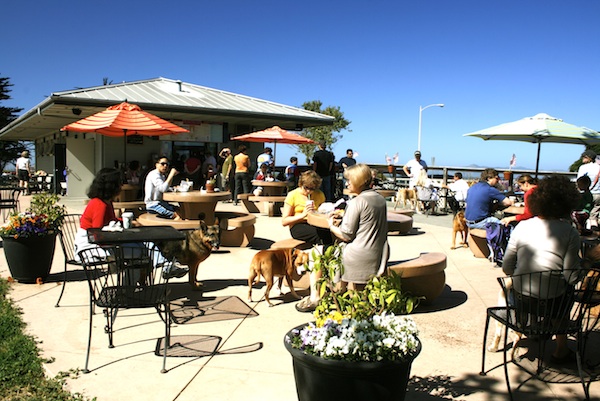
Dogs of all sizes and breeds run unleashed, fetch balls, meet other dogs, swim and enjoy Point Isabel Park in Richmond. Afterwards, dogs and their owners can stop by the only businesses at Point Isabel: Mudpuppy’s Tub and Scrub, where the dogs can get baths, and the Sit and Stay Café, where their people can get coffee and food. These two businesses, run by the same owners, are located one next to another in a small, one level rectangular building. The café is a walk-up counter with seating at a nearby patio. Mudpuppy’s is a pet store that has lots of dog toys, treats and supplies with bathtubs where the dogs get washed. “You came here, you take your dog for a walk, it gets all dirty, then you wash your dog and then you go home. It’s a great location,” said Diane Blake who has been coming for a couple years to Point Isabel to walk her dog, Zoe. “I love being in the East Bay, I love this community, I love dogs,” said Daniel Bergerac, one of the businesses’ three partners and owners. Bergerac, his husband Eddie Lundeen and long-time friend Todd Ahlberg run Mudpuppy’s and the café in cooperation with the East Bay Regional Park District. Mudpuppy’s began about 15 years ago at Point Isabel, but it was much different back then. Original owners Cynthia Sloan and Holly Stockton started washing dogs in a small RV with one tub. A year later they got a 12 by 28 feet “mobile modular” with four tubs, a little sales counter and a ramp so that the dogs could come inside. Lundeen worked as their employee in 1997; soon after that the two original owners decided to move to the country and open a pet wash and a pet store. Lundeen and Bergerac took over the business in 2000. Since then, they worked with the East Bay Regional Park District to build a permanent building for the dog wash. The park district also wanted to add a café; that became the building where Mudpuppy’s and Sit and Stay Café are now. A percentage of every sale goes to the park district and the building is owned by the East Bay Regional Park District. “I loved this park even before we got the business. We were coming here with our dogs,” said Bergerac. Before running Mudpuppy’s, Bergerac was an executive recruiter, and not thrilled to be sitting in an office for ten hours a day, he said. “It was good money but I wasn’t loving it. I just felt that I needed a job that I could love,” said Bergerac. “Finally I quit my recruiting job and started doing this full time and never looked back.” Ahlberg joined the partnership more than a year ago. “I joined to help the company grow,” he said. And the company has grown a lot over the last 15 years. Mudpuppy’s and the Sit and Stay Café now have 10 employees; seven work full-time. Mudpuppy’s sell toys, leashes, collars, training supplies, treats and nearly everything for dogs except food. The dog wash service is very popular. The washer will ask each new customer about their dog — if they have any skin or shedding problems or nail issues, for example. They make sure to pick the right shampoo. They do hair conditioning, nail trims and a flea dip if necessary. Weekends can get busy at the dog wash, so they recommend that people book online or walk in to make appointments. The dog washers get to know their canine clients very well. Jay Villamor , who has been working at Mudpuppy’s and at the café for five years, said that when you have a regular customer, “the dogs tend to bond with you. It’s fun that way.” Villamor started working at the café and after two years was trained to work at the dog wash. “I fell in love with it, because working with a variety of different dogs is not the same as serving the same cup of coffee every day,” he said. Bergerac said that there have been situations where bathers have spotted a dog’s health problem, like when Claudio Eleccion, a employee that had been working there for seven years, found a small tumor on a dog. “When the owner’s took him to the vet, they cut it out on time and the dog is still with us,” said Bergerac. Ahlberg said that he knows the dogs’ names better than their owners’ names —“When we book the dogs for washes, we put the dog’s name, not the person’s name,” he said. He’ll address people by saying, “Hey, Fido’s dad!” Ahlberg thinks that the dog owners enjoy it. “They like that we are all about the dogs,” he said. The Sit and Stay Café does have some treats for humans — a full espresso menu plus chili, soups, deli sandwiches, hot dogs, ice cream, smoothies, and bagels. “Boy, do we sell bagels,” said Bergerac. “I think it’s the best job I’ve ever had,” said Simone Granada, who has worked at the café for five years. She started working at the café because she liked the dogs, and found that her employers helped her go to college by giving her flexible work hours. Granada describes the work environment as being like a family, and a good place to network because business is always good and different people are always coming into the café. “Having the café is like when you have a party and people congregate in the kitchen. It gives them some place to eat and have a good time,” Lundeen agreed. Bergerac said that people bring family and friends that are visiting from out of town “to see Mudpuppy’s, to see the café and to see how incredible this park is.” Point Isabel is a 23-acre park at the west end of Central Avenue in Richmond. Visitors get a wide view of San Francisco, the Golden Gate and Marin County from the park. Its attractions include bird watching, fishing, jogging, running,

Running a business for man’s best friend Read More »

Seven winners at Contra Costa College Community Chess Tournament

For two hours it was as if all that surrounded Joel Alcaraz, 10 and Greg Lope, 33, had disappeared. Divided physically by a chessboard and mentally connected by the game, they competed at the Contra Costa College Community Chess Tournament this past Saturday.  “If I beat him, he is just a kid, but if I loose, I got beat by a kid,” Lope joked lightheartedly after the game. Lope won, but it was tough and he knew it would be — he had seen Alcaraz play before. Lope and Alcaraz were two of the 28 participants of the fourth tournament organized by the West Coast Chess Alliance, a nonprofit community-based chess advocacy group. Co-directors, Trendell Ball and Will Delaney are promoting chess by teaching it in Bay Area schools, nonprofits and community centers. Some of the participants were their students. Contra Costa College supported the event by providing the facilities and the chessboards. Players all ages were welcome and registration was free. The turnout at the tournament included a very diverse crowd of people: The youngest participant was 6 years old and the oldest was 50. Some were Richmond residents and some came from surrounding cities. “Chess is a great equalizer,” said Ball. “You can compete on an equal basis with anybody.” The event was a “quad tournament” in which players are divided in groups of four. Each participant has to play all the members of their group, so they play three games. “The quad is a fun way to play,” said Ball because it’s a friendly format for beginners. “Players talk and get to know each other in their group. Plus you have more winners.” There were seven quads (groups of four) and seven winners in this tournament. The kids who won went home with a trophy. “Young people love the trophies,” said Ball. Jaqueline Leal, 10, didn’t win this time but she wants to compete again, “so I can win the trophy.” Leal learned to play at Girls Incorporated of West Contra Costa, a nonprofit involved in education and advocacy for girls. She says she likes how chess makes her focus and she likes the challenge of competing. At home she plays chess with her 13-year-old brother and she writes down moves and strategies to win. Do Nguyen, 17, who is from a family of Vietnamese immigrants, learned to play a year ago and has started studying chess moves, too. He sometimes plays Chinese chess with his dad or his brother. Like many other players he likes the challenge and the social aspect of the game. “You go to tournaments and you meet new people,” he said. “You get challenged pretty much every time you’re playing and every time is different.” At this tournament, chess players were divided by age. Alcaraz was the only child who asked to be put in a quad with adults. He didn’t care about winning, “I want to learn,” he said. If Alcaraz had played kids his age or older, he would have definitely won said the organizers. The parents of some of the participating children were at the tournament. Joel Alcaraz’s father, Noi Alcaraz, was one of them. He taught his son to play chess when he was four. “He used to play with me before, but I never win now,” he said, laughing, “I tell him, you’re not learning anymore when you play with me.” For Alcaraz, it’s great to see his son be so passionate about chess — it was his dream to be a great chess player but “I didn’t have the chance to excel,” he said. Now his son plays chess online and although the family lives in Vallejo, his father takes him to the Berkeley Chez Club every Friday. Silvia Naldoza, the mother of 8 year old participant Vans Naldoza, said that her son learned to play just a month ago when she persuaded him to join College for Kids at Contra Costa College. Naldoza said her two sons play chess at home. “I know it really challenges their mind. It’s like a mind marathon and I want them to have their brain exercised,” she said. “Chess can be used to promote positive self-esteem in a student because it’s a thinking game and a lot of the youth today aren’t being challenged enough in terms of thinking,” Ball said. His nonprofit is about promoting the positive values embedded in chess. “There are a lot of academic crossovers,” he said, but the group also wants to promote community and family chess playing. Some family members competed at the tournament. Brother and sister Mauricio and Julissa Morfin from Peres Elementary School in Richmond both competed in different quads — Mauricio won the trophy. Father and son David and Gabriel McDonald competed in separate quads too, and both of them won. At six years old, Gabriel was the youngest winner. Other adults who do community work with youth were there to support the kids, including Doretha Morris, the executive director of Girls Incorporated of West Contra Costa County. Eight girls, ages nine to 14, were competing.  For Morris, chess is a really positive thing. “It’s all about increasing their analytical and critical thinking skills. I know that chess will really help them in math as they go along with school,” she said. One of the winners Mauricio Morfin, 11, and proud sister Julissa, 9. Photo by Veronica Moscoso. Carlos Taboada, who runs the chess team at Richmond High School and is a school counselor, came to support two of the kids from the school’s chess club and his own son David. “It is very valuable activity to cultivate mental discipline in the students,” he said of chess. “We think that chess can improve academic skills,” said McKinley Williams, president of Contra Costa College, who attended the tournament. Williams said he’s read research that shows how chess can improve mathematical reasoning, critical thinking and attention span. “It’s a great support for someone that is involved in academic pursues,” he said. Williams is such a supporter of chess that now

Seven winners at Contra Costa College Community Chess Tournament Read More »

Shopping Cart